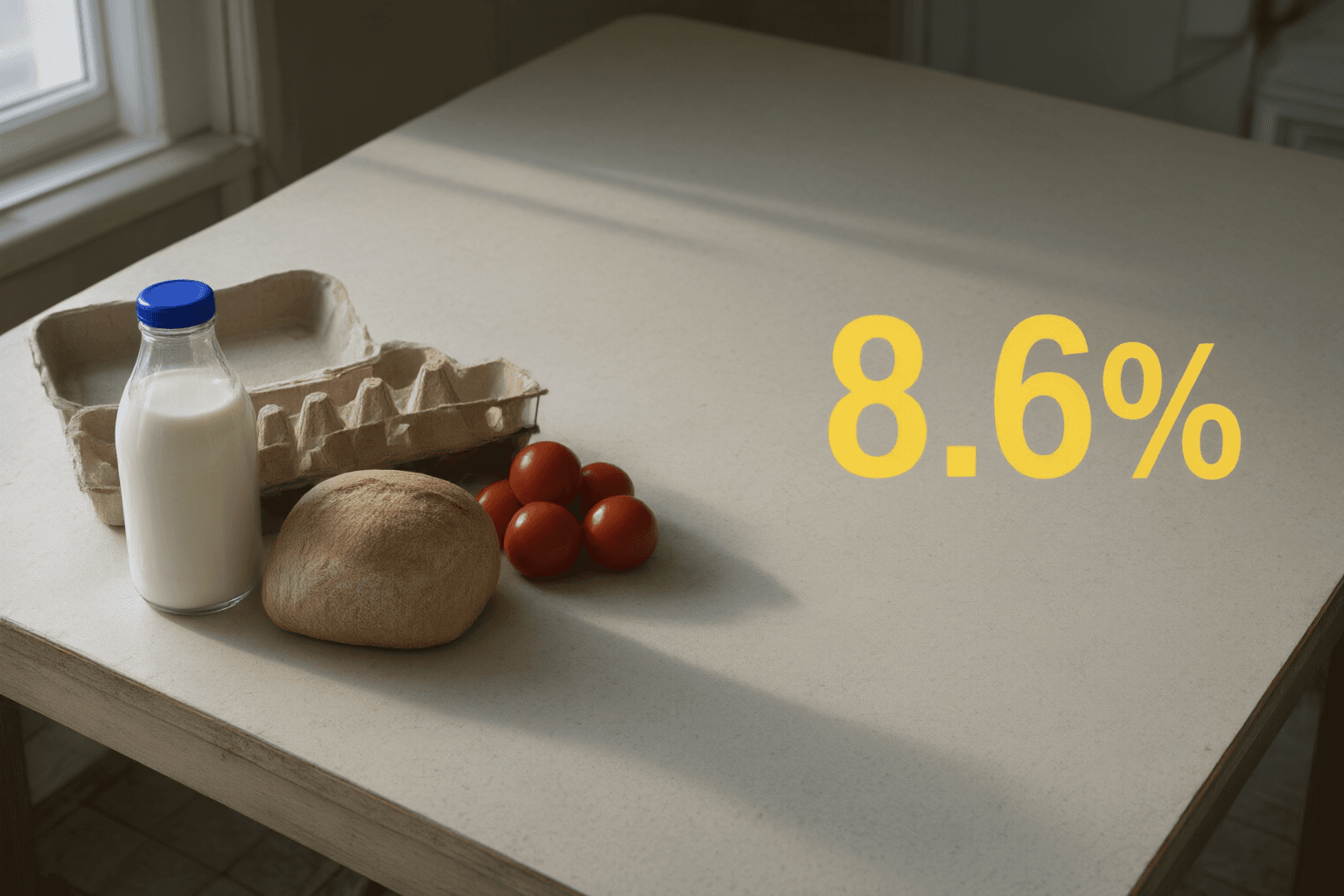
American inflation was 3.7% in September 2026 and the euro area's 3.8%; Britain's latest reading, for August, was 3.1%. None of those numbers is what the public reports experiencing. Britons told the Bank of England in August that inflation is running at 4.9%; euro-area households tell the ECB's Consumer Expectations Survey it is 3.5–4.0%; and The Quant's five-item "felt basket" — groceries, meals out, gasoline, electricity, piped gas — is inflating at 8.6%. The gap is not new: the ECB's analysis of the European Commission's consumer survey puts mean perceived inflation at 8.7% over 2004–2021, against measured HICP inflation of 1.5%. What is new is the direction — after two years of convergence, official and felt inflation are diverging again, and every point of daylight between them is credibility the 2% anchor does not have.
The re-emerging gap
The 2010s were the decade nobody thought about inflation. US CPI averaged 1.8% from 2010 through 2019; the euro area managed 1.4%.


Discussion