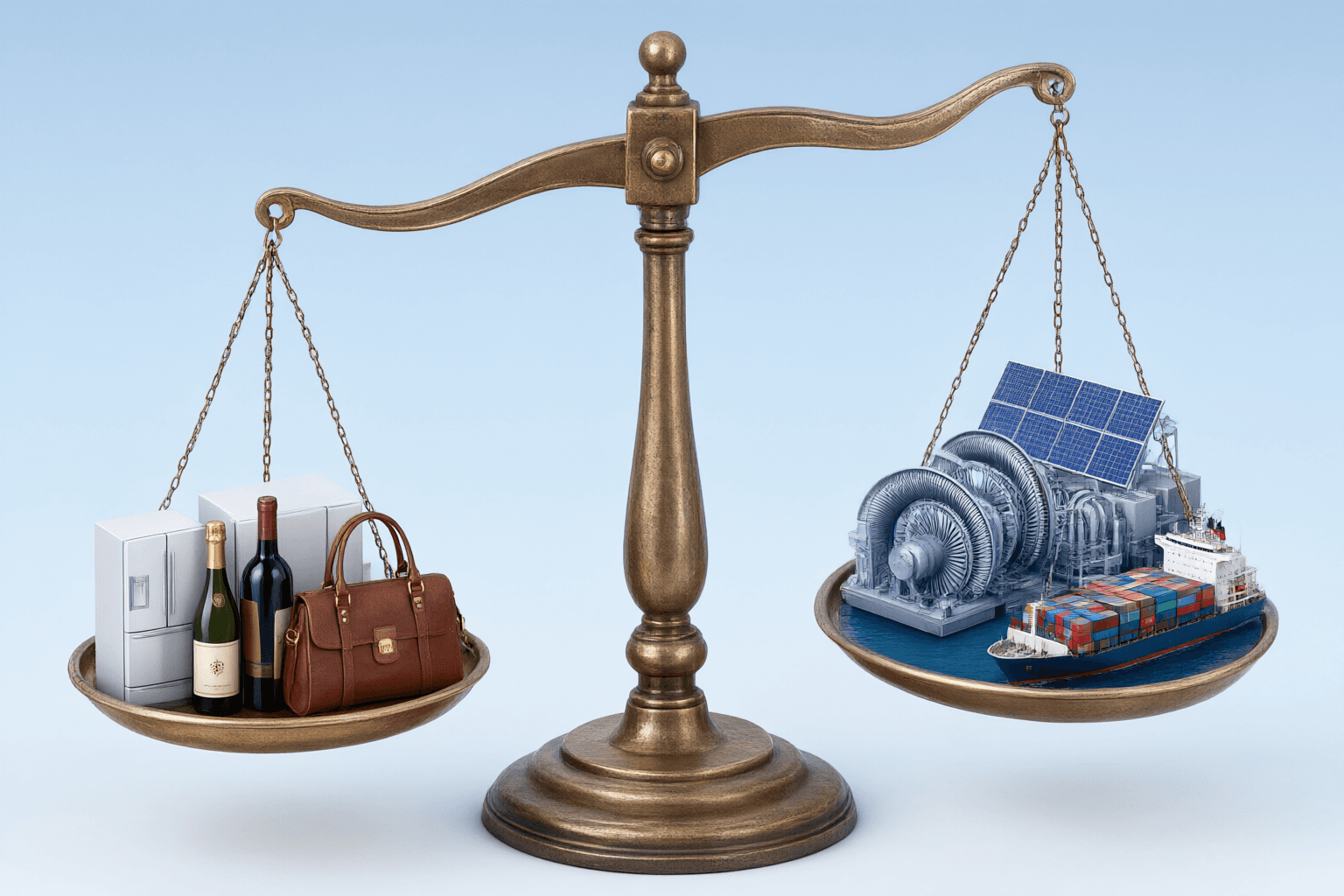
China's merchandise trade surplus reached $1.19 trillion in 2025 — the first time any economy has crossed the trillion-dollar mark. The surplus is larger than the GDP of Switzerland ($1.05 trillion) and roughly 93% the size of Saudi Arabia's. It has doubled in five years, and doubled again in ten. In 2010, it was $181 billion. In 2020, $527 billion. The arc is steepening, and the United States' tariff response — now applied to virtually all Chinese goods — has barely dented it.
The standard prescription from economists and trading partners is that China should "boost domestic consumption." Household consumption accounts for roughly 40% of China's GDP, well below the world average of 57% and the OECD average of 54%. Raising it, the argument goes, would absorb domestic production that currently flows to foreign markets and pull in more imports, narrowing the surplus from both sides.
The logic is sound. The question is whether it is executable — and at what cost.
The Arithmetic of Closing the Gap
Halving the surplus means reducing it by roughly $595 billion a year. There are only two ways to do that: import more, or export less. Everything else is a combination of the two.


Discussion