
The prisoners' dilemma has a feature that is easy to miss. If you own one prisoner, the dominant strategy — confess — is correct regardless of what the other prisoner does. If you own both prisoners through a diversified holding, the dominant strategy produces the worst collective outcome. Your portfolio experiences the aggregate result of two individually rational decisions.
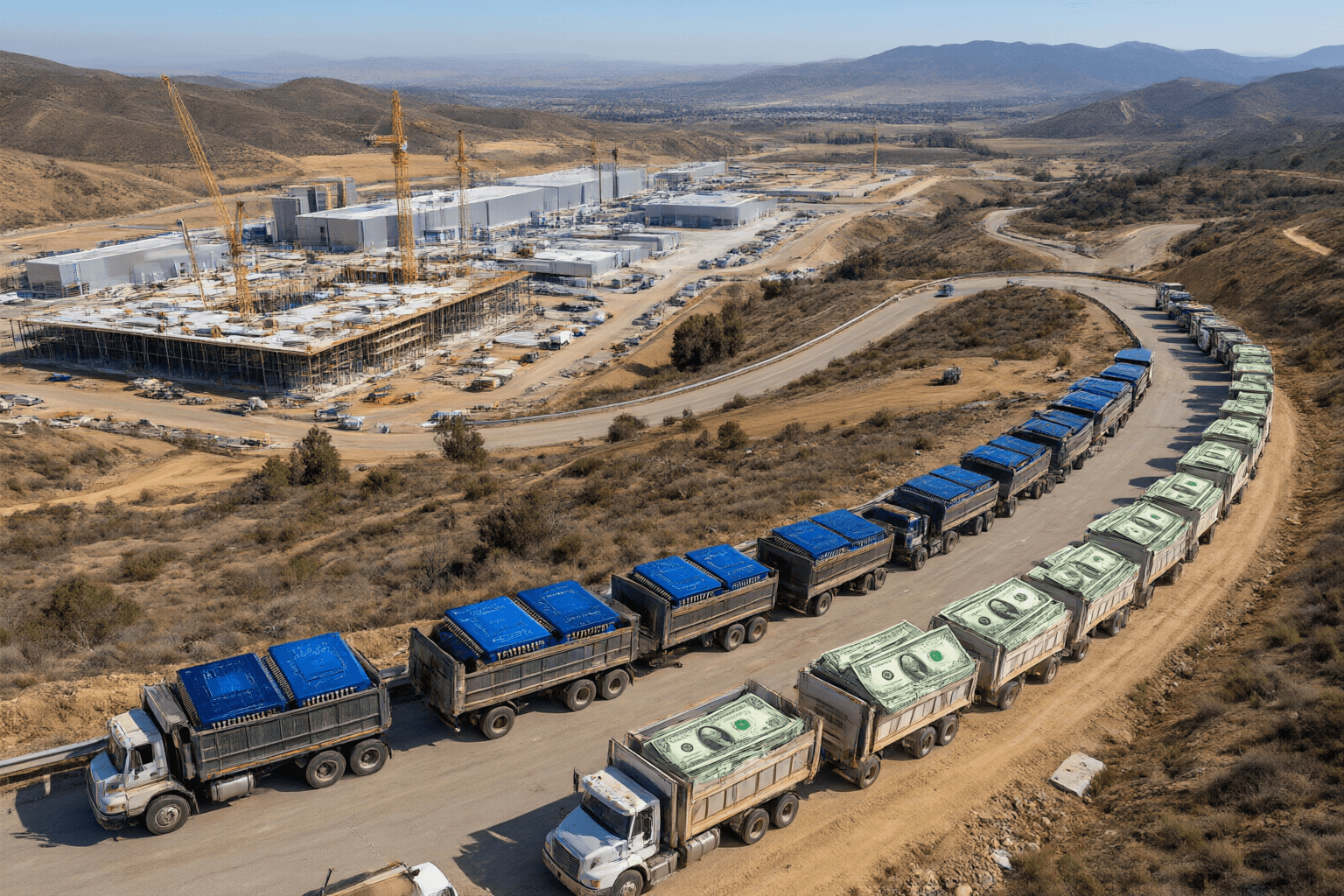
The AI infrastructure buildout is a prisoners' dilemma scaled to $800 billion — the 2026 capital expenditure of the five largest US hyperscalers, per Goldman Sachs. The index fund investor — and anyone holding a broad market portfolio — owns all four hyperscalers, the neo-clouds that are going public, and increasingly the AI labs as they access public markets. The question is whether the aggregate outcome of individually rational overinvestment is tolerable for the diversified holder, and if not, what to do about it.
The Dilemma, Formalized
Four companies sit at the center of the spending: Amazon, Microsoft, Alphabet, and Meta. A fifth, Oracle, has joined them at scale. Each chooses how much to invest in AI infrastructure. The payoff structure:


Discussion