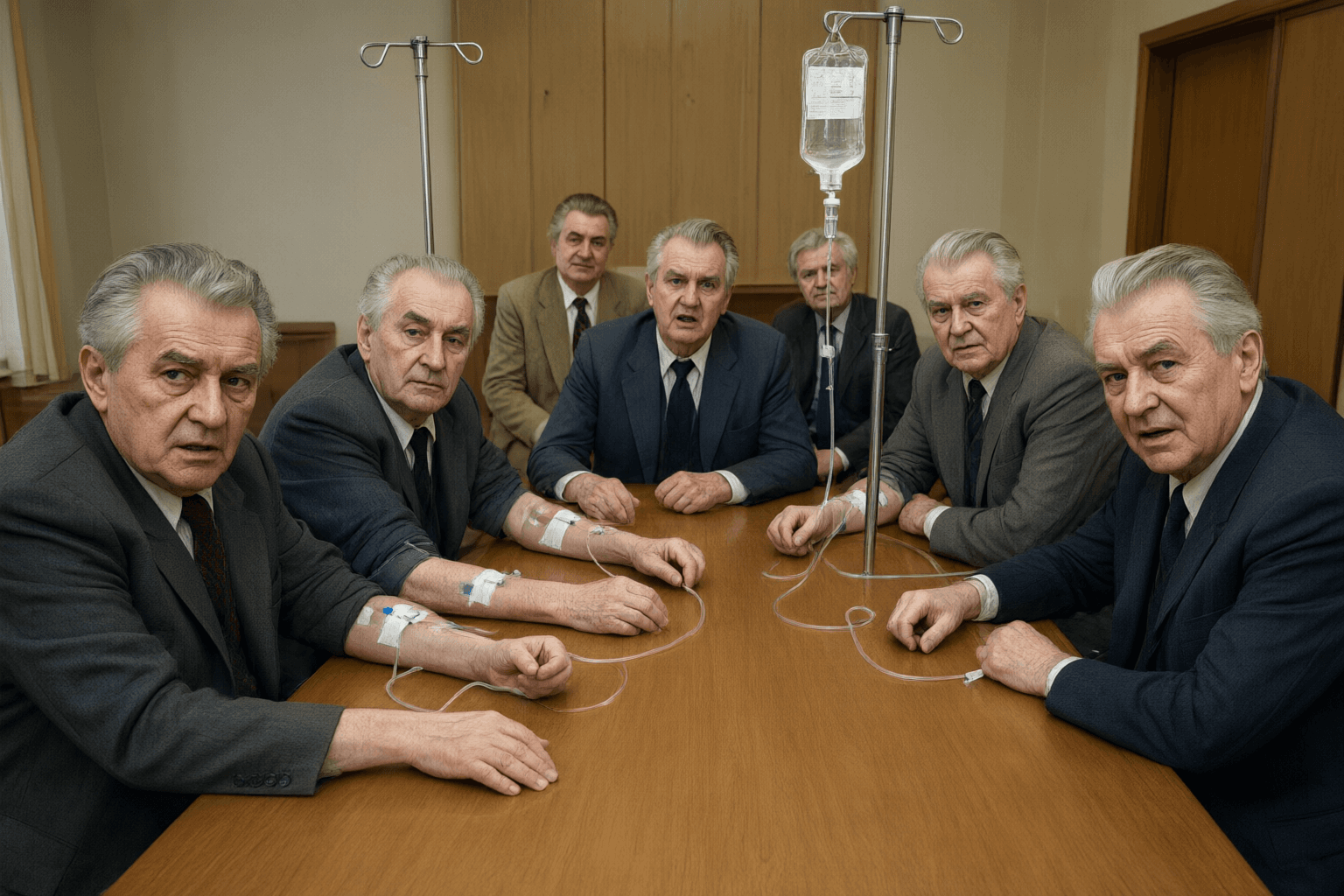
The Cold War frame embeds a claim about leadership. The Soviet system was gerontocratic. The Politburo was old, stale, and disconnected from technological change. Brezhnev was 75 when he died in office. His two successors, Andropov and Chernenko, were 68 and 73 when they took power and died within two years. The Soviet leadership was literally dying of old age while the microprocessor revolution was unfolding. The American system, by contrast, was dynamic. Leaders rotated. New ideas entered. The system adapted.
The claim about the USSR is accurate. The extrapolation to the present is not. The data on age, turnover speed, and skills background of the top leadership in both countries tells a different story than the Cold War frame would predict.
Age: where the gerontocracy lives.
The US presidency has been held by men in their 70s or late 60s for most of the last decade. Trump was 70 when he took office in 2017 and 78 in 2025. Biden was 78 when he took office in 2021. The median age in the US Senate is 65. The median age in the House is 58.



Discussion